

"Everything good and bad I've experienced has always been connected to vineyards and wine."
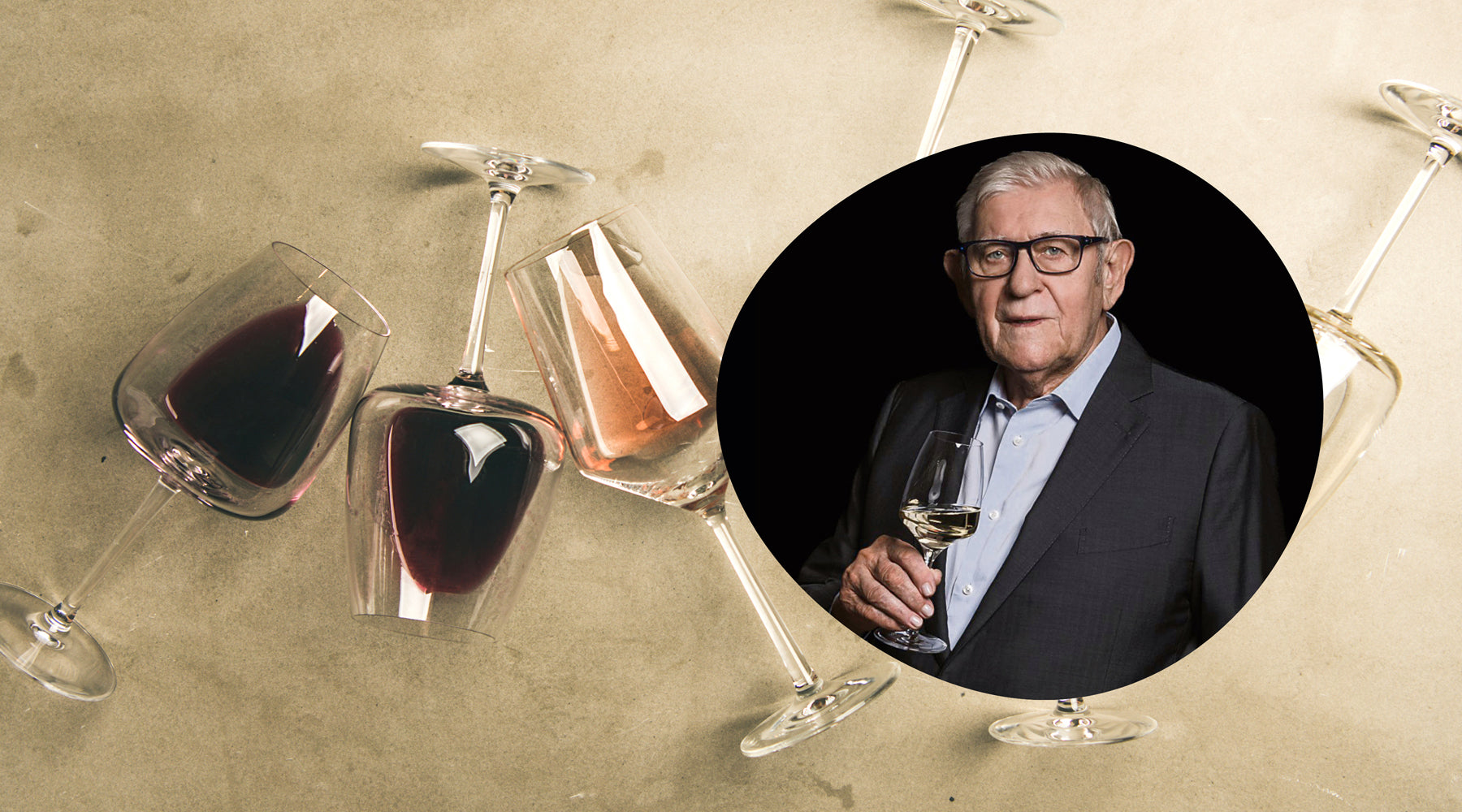
Ján Krampl spoke to the daily Pravda about his beginnings in the vineyards of Račiai and how he became the head of the cellar there. You can read the full interview here: https://varecha.pravda.sk/magazin/nestor-vina-jan-krampl-vino-co-ma-drzi-nad-vodou/19612-clanok.html
What were your first contacts with vineyards and wine?
From the pleasant ones, a ripe grape in my mouth, my mother's strudel, the first glass of burčiak, and from the prosaic ones, a hoe, scissors. Even after my parents' vineyards were taken away by the cooperative, my parents linked my future with wine. They sent me to a school in Modranská and when I returned, the cooperative assigned me straight to viticultural production. They threw me into the water, which for me at the time was the production of grafts, to show what I was worthy of.
Did you manage?
The year 1958 was extraordinary. Blessed with a harvest, but also with rain and the sudden arrival of winter. On November 5th, severe frosts unexpectedly struck. The soil froze and thawed only in the spring of the following year. The cooperative trembled with fear of what would happen to the grafts. They were placed in mounds, to which more than twenty horse-drawn cart drivers cleverly brought steaming manure to prevent the seedlings from freezing. But we managed. In primitive conditions, each of the sixty yesterday's peasants, today's cooperative members, grafted from 600 to 1,000 grafts per day, depending on their skill. Altogether, it was a million grafts. Can you imagine that today?
Not really, because most Slovak winegrowers import grafts from Austria, Italy or Hungary.
This is the sad reality of Slovak viticulture, in which the production of grape seedlings has also collapsed. It only illustrates the position in which not only viticulture and winemaking, but also agriculture and the food industry have found themselves. In Rača, 40 years ago, vineyards spread over 325 hectares, people cultivated vines on 2,100 plots, which best describes the conditions from which it was based.
How do you remember your cooperative years?
As for the years of the great renewal of the Rača vineyards, which took into account the entire territory above the Rača and the adjacent area of Bratislava. In the seventies, not only wide-band terraces were built, but also retention tanks for storm water. The renewal of the vineyards protected Krasňany and Rača from high water, the reward for this was wine from new plantings of Veltliner Grüne and Riesling Wlašský and today the much-emphasized greening of the city.
What was the wine like in those days and how did you get into making it?
Wine is always a reflection of the times and their tastes and mindsets. Once, in our cooperative cellar, there was a wine tasting, I think it was in 1962, the cellar master boasted that he had even better wine at home than the cooperative's. This angered the chairman at the time and I didn't even know how, I became the head of the cellar. It was clear to me that I would only last as long as our wine was the best. That's how my journey to find good wine began at the cooperative in Rač. We operated the U kmotra wine bar (a former German cultural center), which was full of people from the city on Saturday afternoons. Visitors also besieged the cooperative's wine cellar in the center of Rač as well as the wine cellar on Nedbalová Street, where famous Bratislava actors went in particular. Imagine that we sold from 900 to 1200 liters of wine a day in just one wine cellar, served with slaughterhouse specialties.

Written by Villa Vino Rača