
Why can wine smell of coffee?
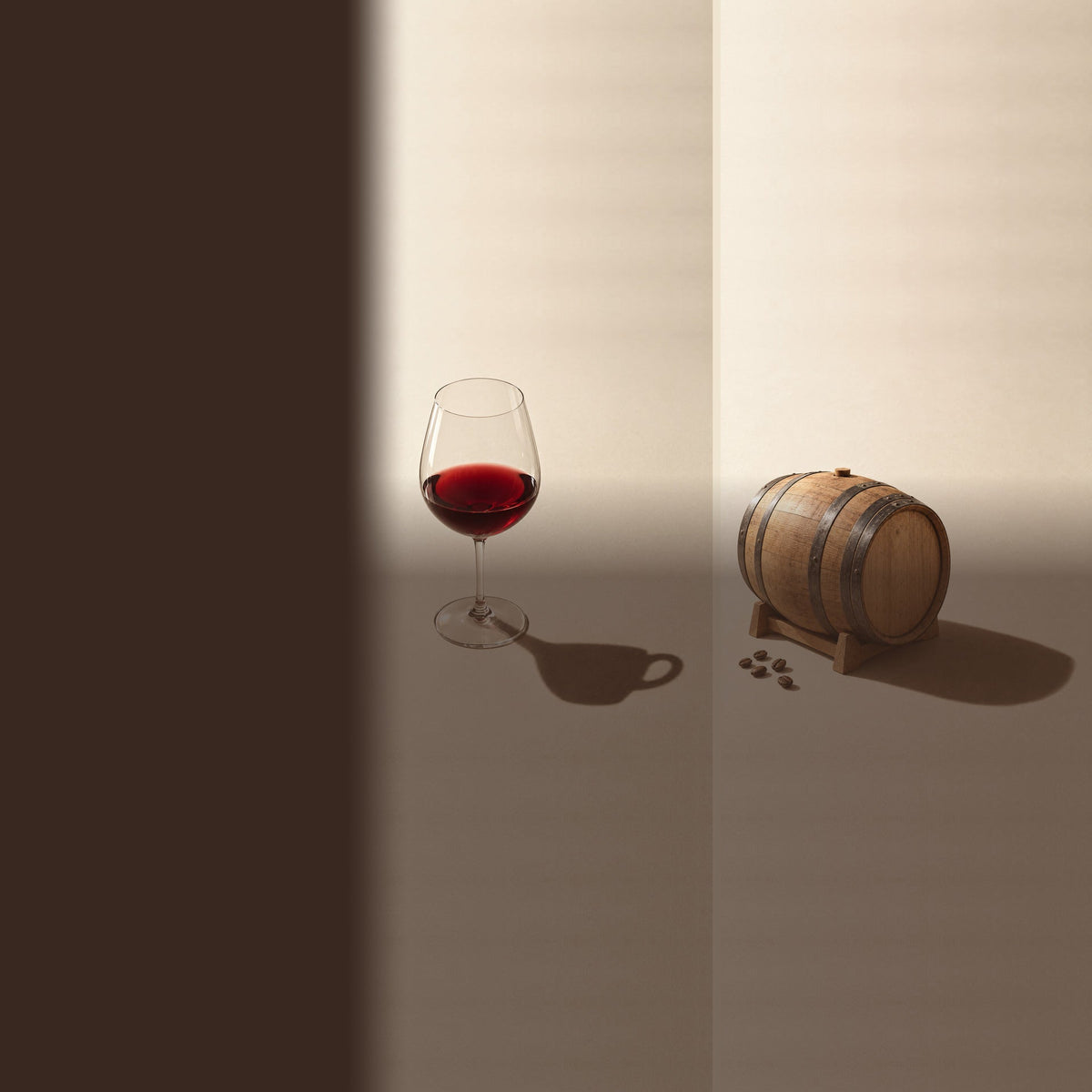
Wine can smell of roasted coffee, but coffee is never added to it. Contact with toasted oak is one possible connection. For International Coffee Day on 1 October, we looked at coffee aromas in wine.
Oak barrels and roasted aromas
Oak is heated during barrel making, a process known as toasting. This produces compounds that can contribute roasted and coffee-like aromas to wine. The result depends on the wood, how it is toasted and the conditions in which the wine is made.
Knowing that a wine has spent time in an oak barrel does not tell us exactly how it will smell. Vanilla may be more noticeable in one wine, while roasted notes stand out in another. A coffee-like note can be faint and appear alongside other aromas. The barrel also interacts with a wine that already has its own aromatic profile.
The chemistry behind the smell
One compound associated with the smell of roasted coffee is 2-furfurylthiol, also called 2-furanmethanethiol. Tominaga and colleagues identified it in 2000 in certain white and red wines, as well as toasted oak. It can be detected at very low concentrations.
Blanchard and colleagues later studied its formation during white-wine fermentation in oak barrels. Both furfural released by the toasted wood and yeast activity played a part. Several processes during winemaking can therefore contribute to a coffee aroma. The time spent ageing in a barrel does not explain the whole result.
This research helps explain where the smell can come from. We still learn about an individual wine by smelling its aromas together in the glass.
Coffee has many different aromas
We may not all picture the same smell when we hear “coffee aroma”. Coffee varies with its variety, origin and, especially, how it is roasted. In a wine description, the word coffee expresses a resemblance to a smell we recognise.
It helps to be specific. Does the aroma suggest freshly roasted beans, or a broader roasted note? One person may notice a coffee note in a wine while another associates its aroma with something different. A description should start with the wine in the glass, rather than an assumption based only on its grape variety or barrel ageing.
How aromas change in the bottle
Roasted and coffee-like notes may be more pronounced in our freshly bottled red wines. As a wine ages in the bottle, those notes can soften and their balance with other aromas can change. Tobacco, cedar or leather may become more noticeable.
The wine’s overall bouquet is developing. The pace and outcome will differ from bottle to bottle, so naming the wine and vintage gives an aroma description useful context. A note recorded at one tasting may not describe the same wine precisely after further ageing.
Palugyay and the influence of oak
Our Palugyay Cabernet Sauvignon 2019 matured in an oak barrel. We allow longer contact with wood for Palugyay and Grand Vin wines, including Grand Vin Dunaj.
Our description of Cabernet Sauvignon Palugyay names ripe blackcurrant and gentle vanilla on the nose. When you smell a glass, try describing the aromas you notice without trying to find every note at once. Pay attention to how the aroma develops in the glass, too.
Before serving, our guide to wine serving temperatures will help you prepare the wine at a temperature suited to its style.